
The relationship between families and school is one of the most beneficial partnerships in producing a generation of great thinkers. Like any partnership, the family/school partnership must be nurtured, so schools host events to establish and maintain a positive relationship. When schools host family events, how can they best use their time together to support and advance student learning? How do they truly make learning a family affair?
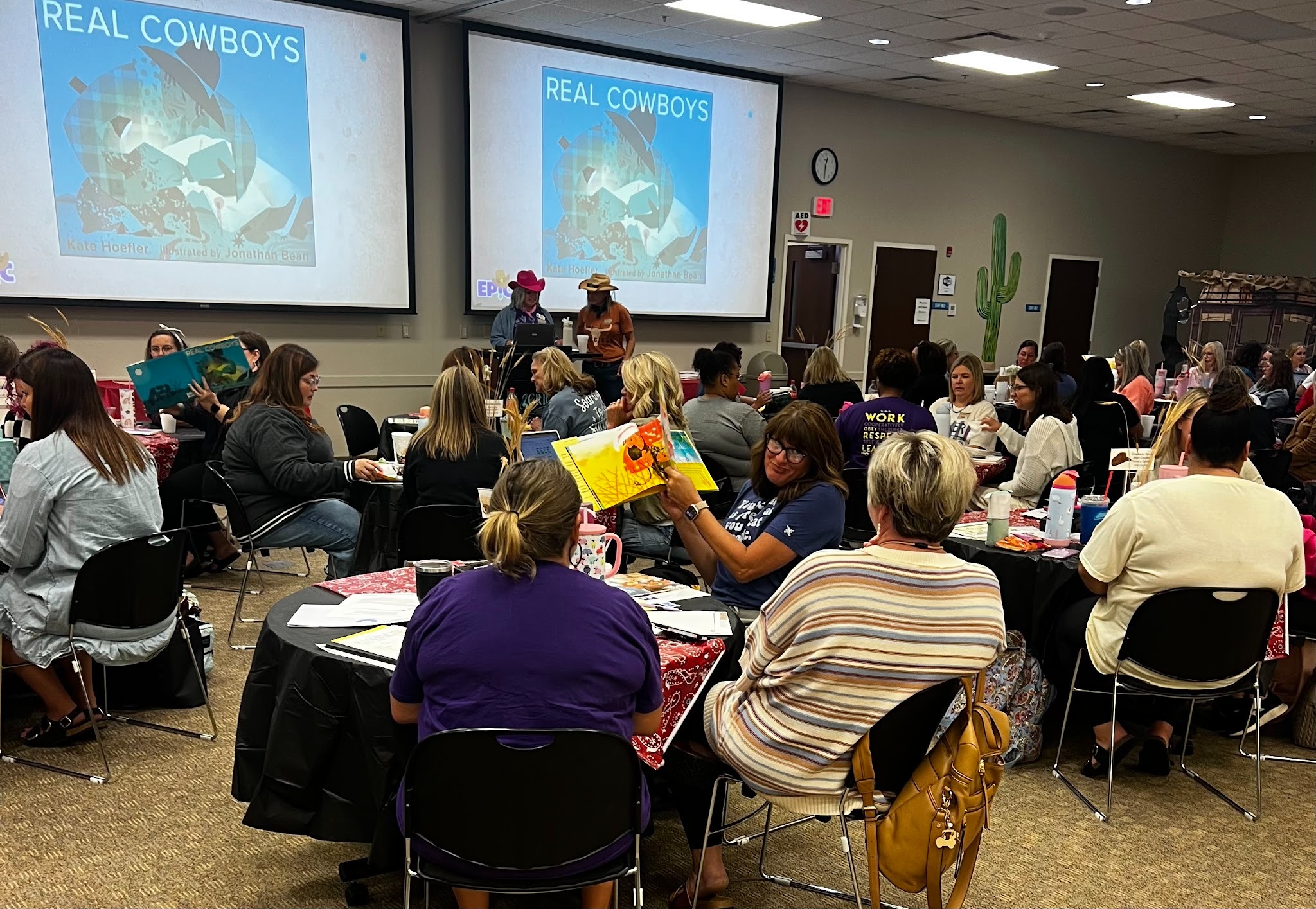
Too often we answer these questions in isolation; however, on August 25, 2026, literacy educators, education leaders, and Youth Service Center representatives rallied at the EPIC Family Engagement Series Literacy Night event to plan ways to engage families in supporting literacy at home.
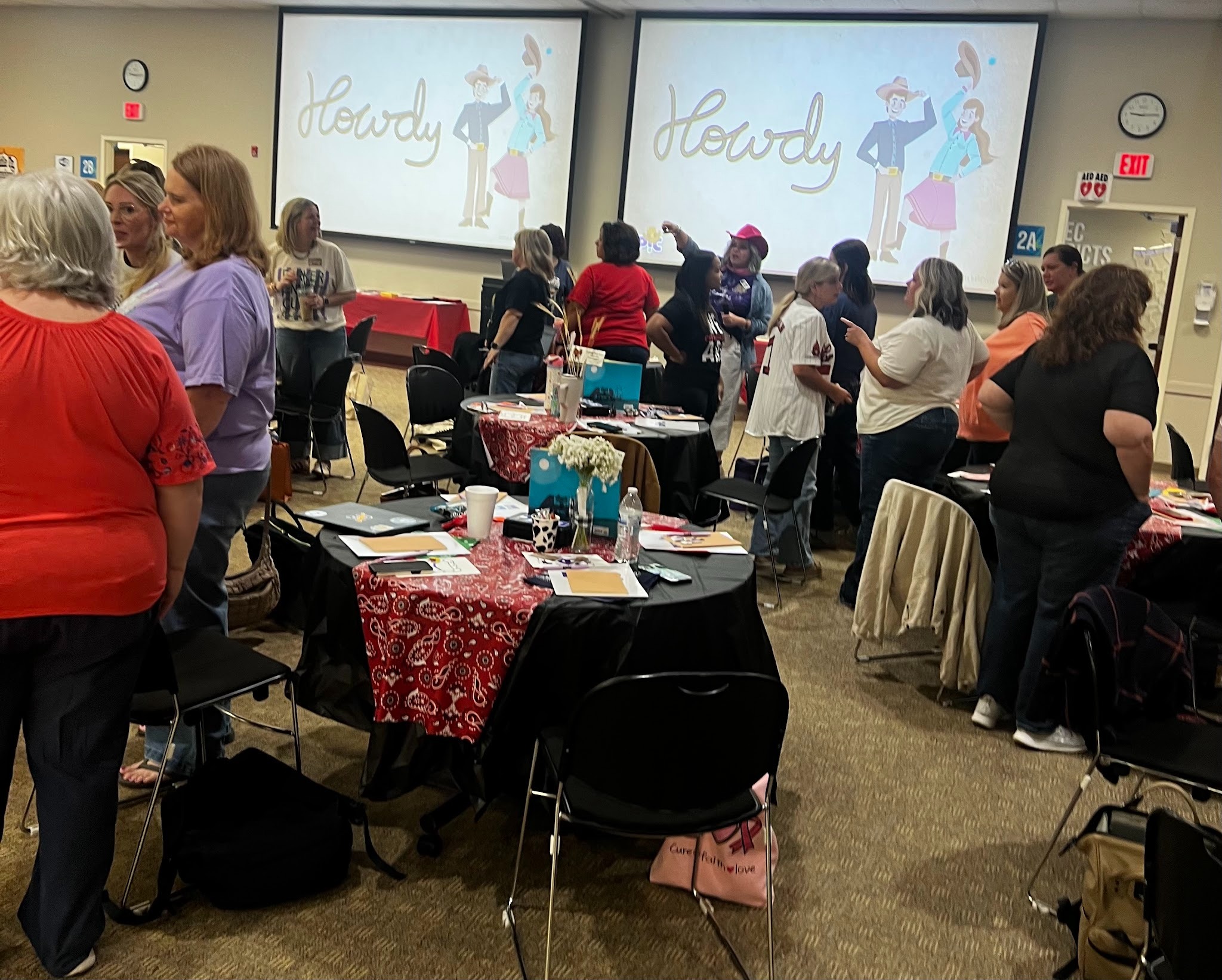
The theme of the day was Saddle Up to Literacy, and among the howdies and yee-haws galloped rich conversations about the Science of Reading, literacy, culture, and community.
Wrangling the Science
The Science of Reading influences how teachers teach young people to read. At times, some of the methods run counter to how some adults learned to read. For example, many adults recall lists of spelling words in elementary school, so when their children don’t bring traditional spelling lists home, they (without knowledge of the Science of Reading) wonder why. Some families may even express concern that the practices they attribute to making them literate aren’t being provided to their children. Teachers are at the center of these conversations and work diligently to maintain families' trust. However, without hands-on experience with research-based literacy practices, families may struggle while supporting their young learners at home.
To better facilitate events that lead to literacy practice in homes and a better understanding of the work being done in classrooms, educators at this event centered their thinking on the knowledge that “all families…were interested in their child’s educational success and could effectively support their child’s learning at home and school when provided with the information and guidance that they needed” (Van Voorhis, Maier, Epstein, & Lloyd, 2013).
Families’ interest in and willingness to support their children’s education makes family engagement events so integral.
It is important, then, that all stakeholders have the same language and a basic understanding of literacy. Educators at this event worked on and practiced plans that engage families and bridge any existing knowledge gaps.
Experience as a Teacher
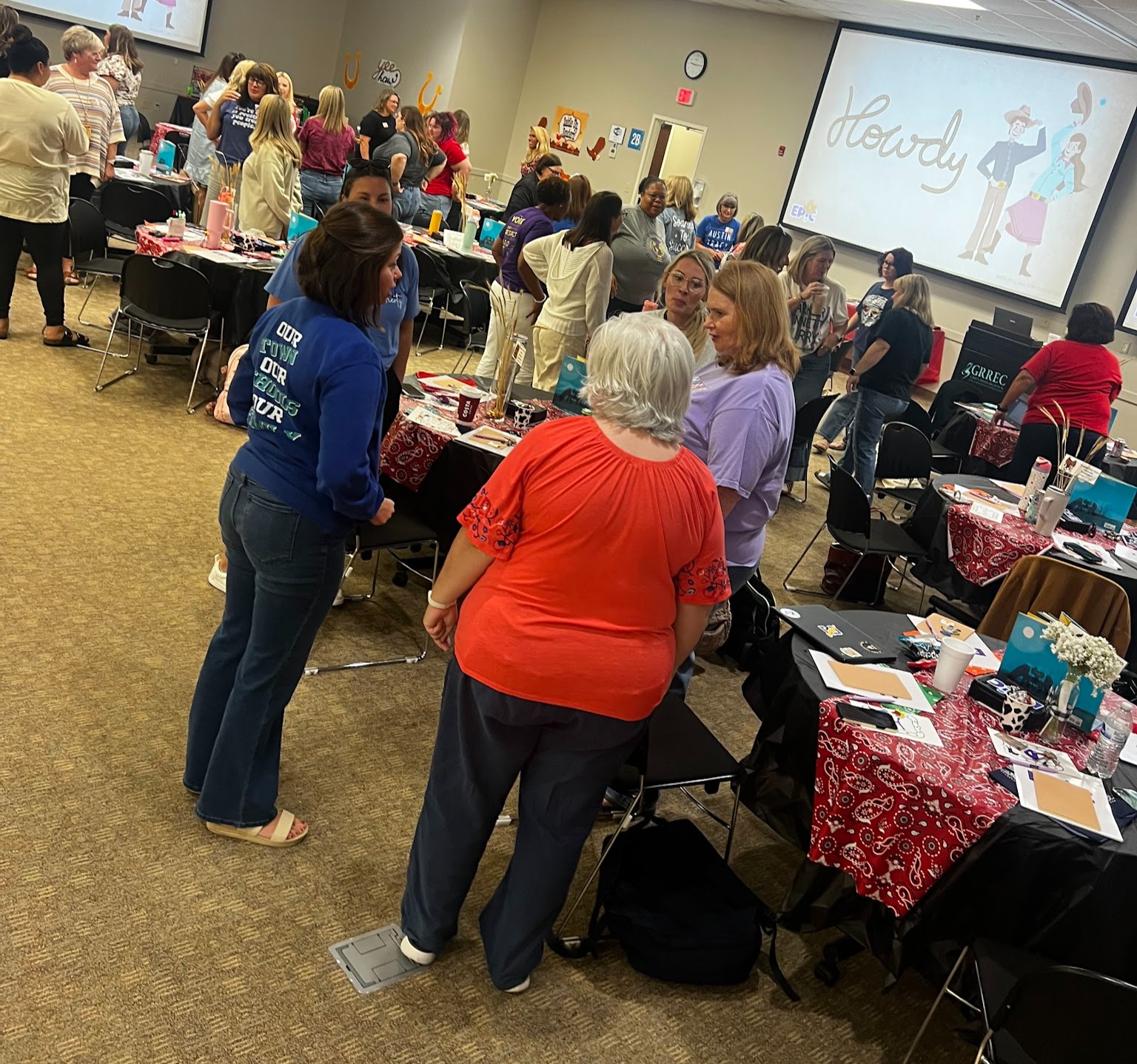
One way participants practiced bridging the gap was through literacy stations. This immersive experience helped educators at the schools represented imagine positive literacy experiences that families could learn from and reinforce at home. The goal is not to turn homes into school 2.0 but to highlight home practices that foster children’s ability to learn and continue learning.
Participants experience the eight building blocks of literacy in new and creative ways by visiting the eight literacy stations just as families would. This experience sparked educators’ creative ideas about how this could look in their schools. They reflected on the homes represented in their schools and found actionable, beneficial solutions.
Investing in Families
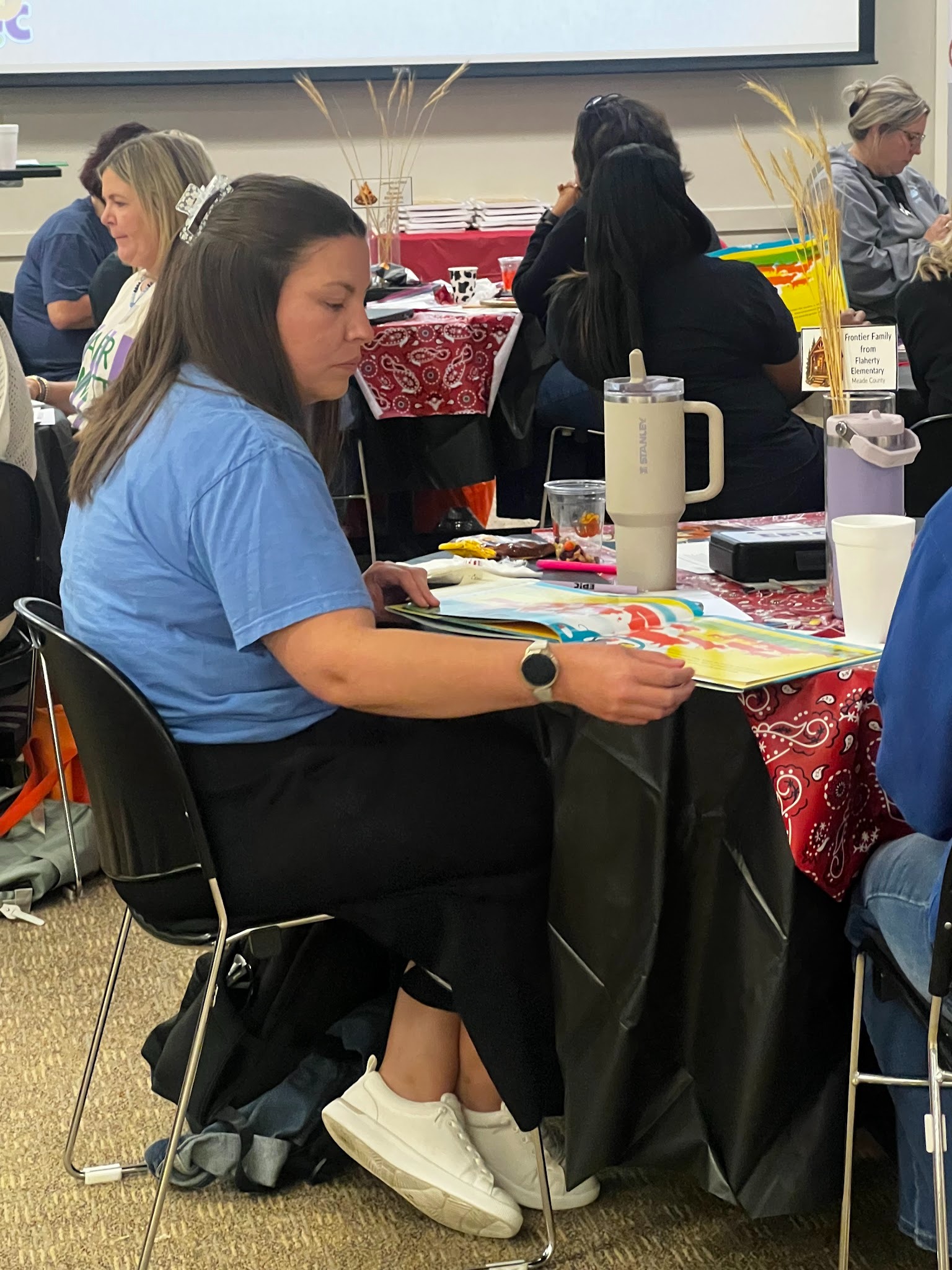
Many of our families’ homes are busy, so the events schools invite them to attend must be worthwhile. Participants in the Saddle Up to Literacy event discussed ways that literacy is embedded in the day-to-day interactions between adults and learners. Often, informed families can leverage seemingly small daily interactions to increase literacy. How empowering is it for a family to learn that practicing phonemic awareness with children for 5-10 minutes a day has a positive impact on literacy (KDE 2023)? Now, imagine that same family knowing that practicing phonemic awareness can look like reading signs together on the way to school or playing I Spy with sounds on the way from school (I spy something beginning with the sound /t/). The mission becomes possible, and the fruit of families’ labor shows up in the classroom.
Participants in Saddle Up to Literacy saw how family engagement events inform and empower families and contributes to positive student outcomes like student achievement, improved family-school relationships, and improved school environment (Henderson & Mapp, 2002). They walked away with the mental and physical tools necessary to host a well-constructed family engagement event that all members of the family could learn from and enjoy. Schools will see positive shifts emerge in their schools and communities as they unite to support families in the mission to advance the literacy of the next generation.
Join EPIC on December 1, 2026 for the next Family Engagement Series: Numeracy Night.
Want to Dive Deeper?
Henderson, Anne T., and Karen L. Mapp. A New Wave of Evidence: The Impact of School, Family, and Community Connections on Student Achievement. Southwest Educational Development Laboratory, 2002. ERIC, files.eric.ed.gov/fulltext/ED474521.pdf.
Kentucky Department of Education. Read at Home Plan Family Guide. Kentucky Department of Education, 2023, https://www.education.ky.gov/curriculum/conpro/engla/Documents/Read_at_Home_Plan_Family_Guide.pdf
Van Voorhis, Frances L., et al. The Impact of Family Involvement on the Education of Children Ages 3 to 8: A Focus on Literacy and Math Achievement Outcomes and Social-Emotional Skills. MDRC, Oct. 2013. ERIC, ED545474, https://files.eric.ed.gov/fulltext/ED545474.pdf